Chapter 5
Cultural Destruction
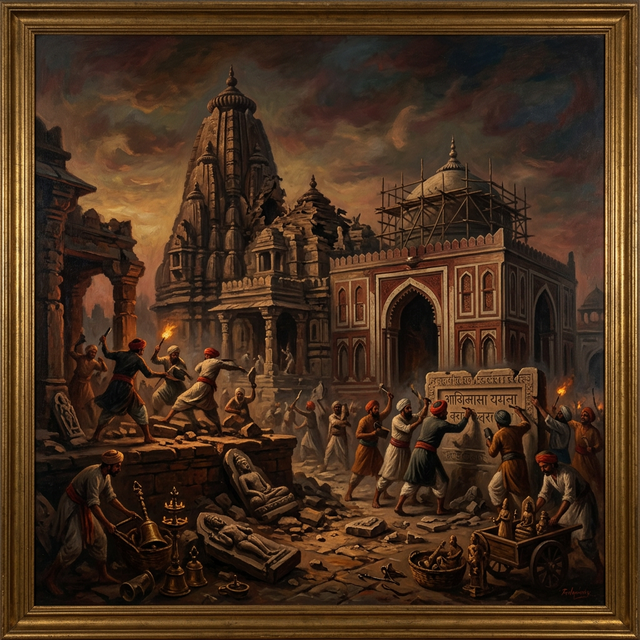
The systematic demolition of Hindu temples, Sanskrit institutions, and cultural heritage across the Gangetic plains — with the Atala Devi temple as the most visible symbol.
The systematic demolition of Hindu temples, Sanskrit institutions, and cultural heritage across the Gangetic plains — with the Atala Devi temple as the most visible symbol.
The most visceral and visible evidence of Khwaja Jahan's cultural destruction stands in Jaunpur today — the Atala Mosque, built on the foundations of and incorporating the materials from the demolished Atala Devi temple.
The original Atala Devi temple was an ancient and revered Hindu shrine at Jaunpur. When Malik Sarwar established his power base there, construction of the Atala Mosque began (completed under his successor Ibrahim Shah Sharqi c. 1408 CE). The Archaeological Survey of India's own documentation confirms:
The Atala Mosque in Jaunpur (Uttar Pradesh) is a public monument maintained by the Archaeological Survey of India. Any visitor can observe the Hindu architectural elements incorporated into its structure. The ASI's own archaeological reports document this. This evidence is not disputed — it is simply absent from school textbooks.
The Atala Devi temple is the most famous, but far from the only example. Archaeological and chronicle evidence documents widespread temple destruction across the territories controlled by Malik Sarwar and the subsequent Sayyid dynasty:
Ancient Devi temple demolished c. 1393–1408 CE. Atala Mosque built on its foundations using its own columns and materials. ASI-documented.
Hindu temple demolished to build the Jhanjiri Mosque. The mosque's name "Jhanjiri" (chain) refers to chains installed to mock the Hindu deity's original chain decorations.
Built under Sharqi rulers (Malik Sarwar's successors) on a previously sacred Hindu site. Archaeological evidence shows Hindu temple structural elements in its foundation.
Multiple temples in the sacred Kashi (Varanasi) region were damaged or destroyed during the Timur invasion of 1398 that Khwaja Jahan enabled. Some Sayyid-era campaigns also reached the Varanasi periphery.
Surviving structures of the ancient Buddhist-Hindu Vikramashila monastery (already devastated by earlier rulers) were further demolished during Sharqi Sultanate (Malik Sarwar's political heirs) campaigns into Bihar.
Temples across the Katehr and Doab regions destroyed during Sayyid military campaigns against non-compliant Hindu zamindars. Documented in Yahya Sirhindi's chronicle.
The cultural devastation was not limited to physical temples. The era saw the systematic dismantling of India's indigenous knowledge system:
What is particularly tragic about the cultural destruction in the Jaunpur region is the erasure of a sophisticated Hindu civilization that had flourished there for millennia. The Jaunpur area (ancient Yavanapur / Pratishthangpur) was a significant center of:
All of this was systematically dismantled and replaced with the Jaunpur Sultanate's Islamic cultural program. What textbooks today call the "cultural flowering of the Sharqi Sultanate" was, from the Hindu perspective, the violent cultural replacement of an indigenous civilization.